
Spocket has been one of the more heavily marketed dropshipping platforms of the
last few years, and it comes up constantly in discussions about sourcing US and
EU products. The pitch is straightforward: connect your Shopify or WooCommerce
store to a curated network of vetted suppliers in North America and Europe, get
faster shipping than AliExpress, and run your business without touching inventory.
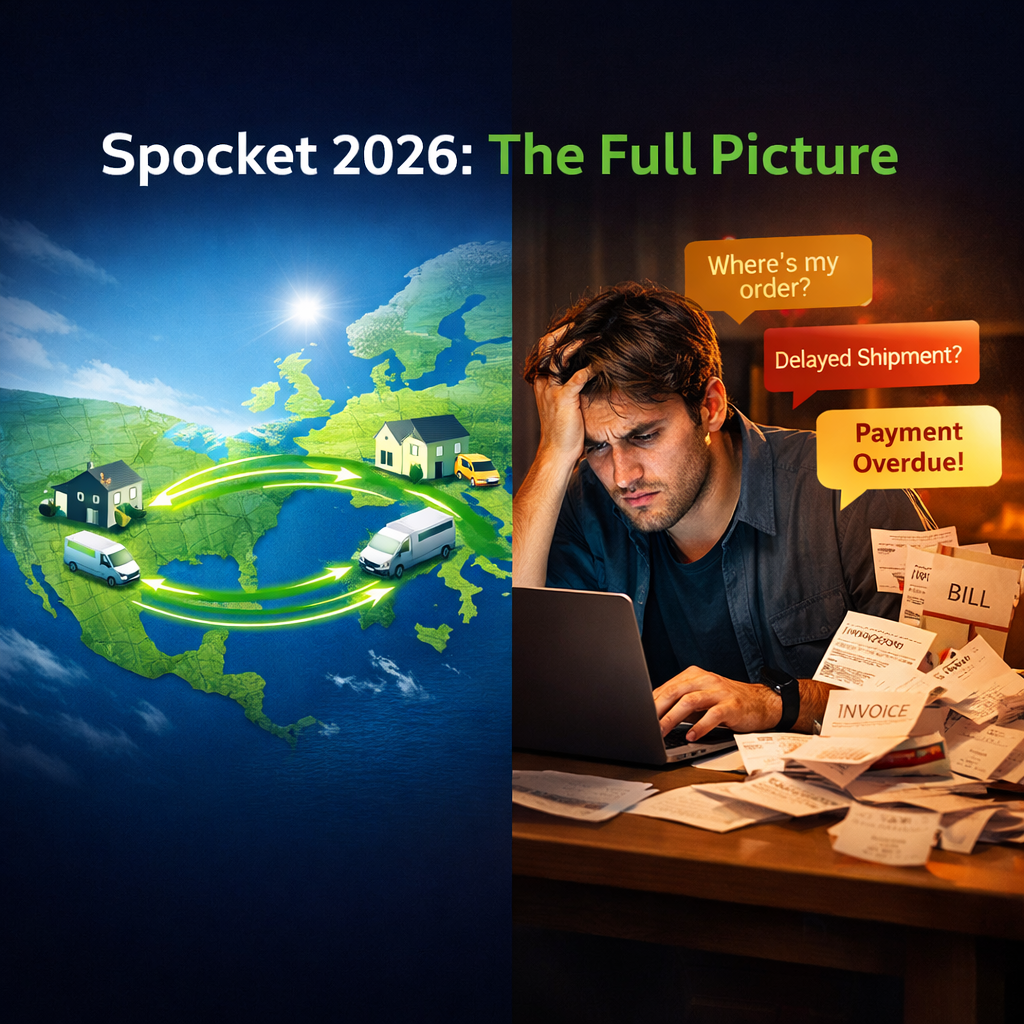
That pitch is real – Spocket does deliver on parts of it. But there’s a second
story running alongside the marketing narrative, visible in hundreds of reviews
across Capterra, G2, Trustpilot, the Shopify App Store, and consumer complaint
sites – a story about billing practices, support quality, and a subscription
system that many users describe as deliberately difficult to cancel. This review
covers both sides without glossing over either.
WHAT SPOCKET IS AND HOW IT WORKS
Spocket is a dropshipping supplier marketplace, founded in 2017 and headquartered
in Vancouver, Canada. It operates as a layer on top of existing e-commerce platforms –
you connect it to your Shopify, WooCommerce, Wix, BigCommerce, or other store, and
use it to source and list products from its supplier network.
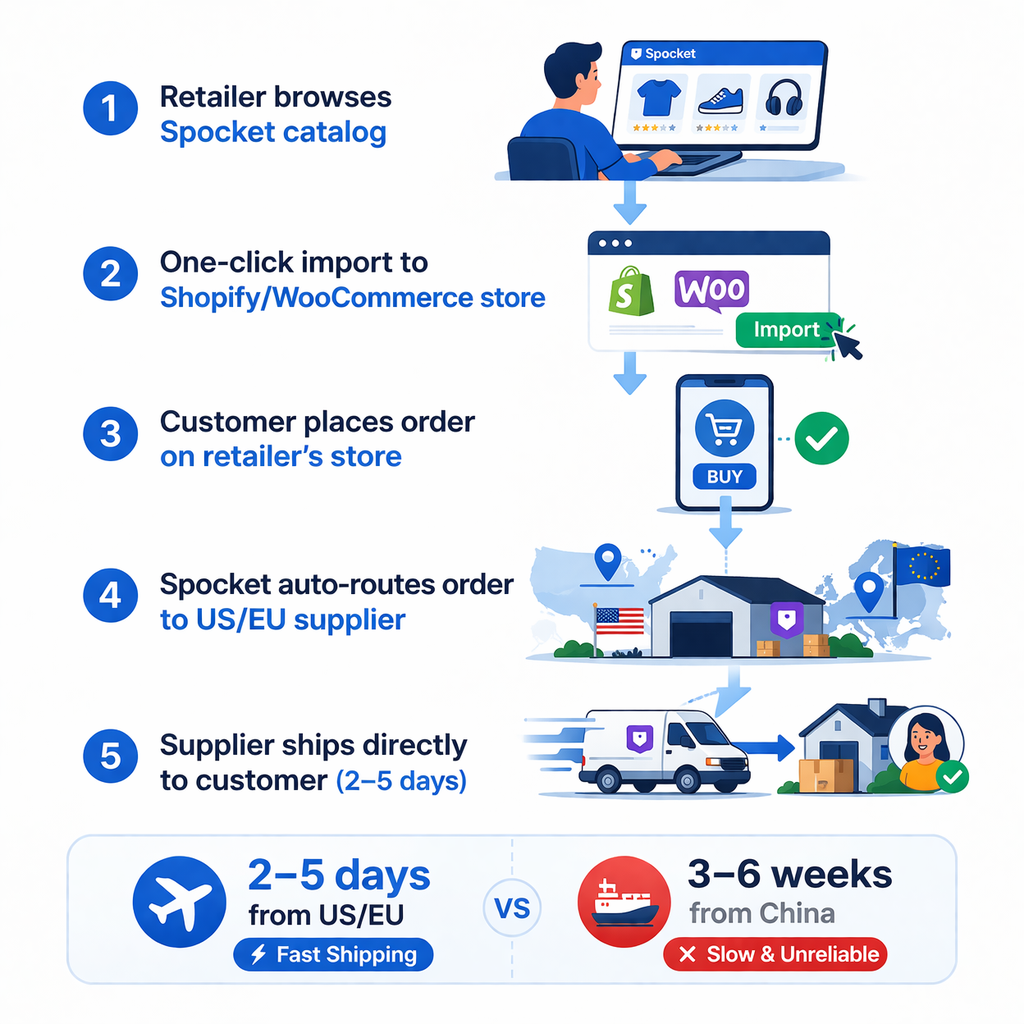
The core workflow is simple: browse Spocket’s catalog, add products to an import
list, push them to your store with one click (including titles, descriptions, and
pricing), and when a customer orders, Spocket forwards the order to the supplier
automatically. You pay the wholesale price, your customer pays retail, and you keep
the margin. No inventory, no warehouse, no manual fulfillment steps.
What makes Spocket different from AliExpress-based tools like DSers is geography.
Roughly 80% of Spocket’s suppliers are based in the US or EU, which translates to
2-5 day delivery for American customers and 3-8 days for European ones. For any
business where delivery speed is a competitive factor – which is most consumer-facing
stores in 2026 – that’s a meaningful operational advantage over China-based supply chains.
KEY POSITIONING NOTE: Spocket is a supplier sourcing layer for existing stores, not
a standalone store builder. You need a separate e-commerce platform (Shopify,
WooCommerce, etc.) plus a Spocket subscription. This is fundamentally different from
all-in-one solutions – it adds to your stack, not replaces it.
PRICING: FOUR TIERS WITH A WIDE COST RANGE
Spocket’s pricing structure has four tiers on monthly billing. Annual plans offer
significant discounts – up to the equivalent of 8 months free – which matters
because the gap between monthly and annual cost is substantial.
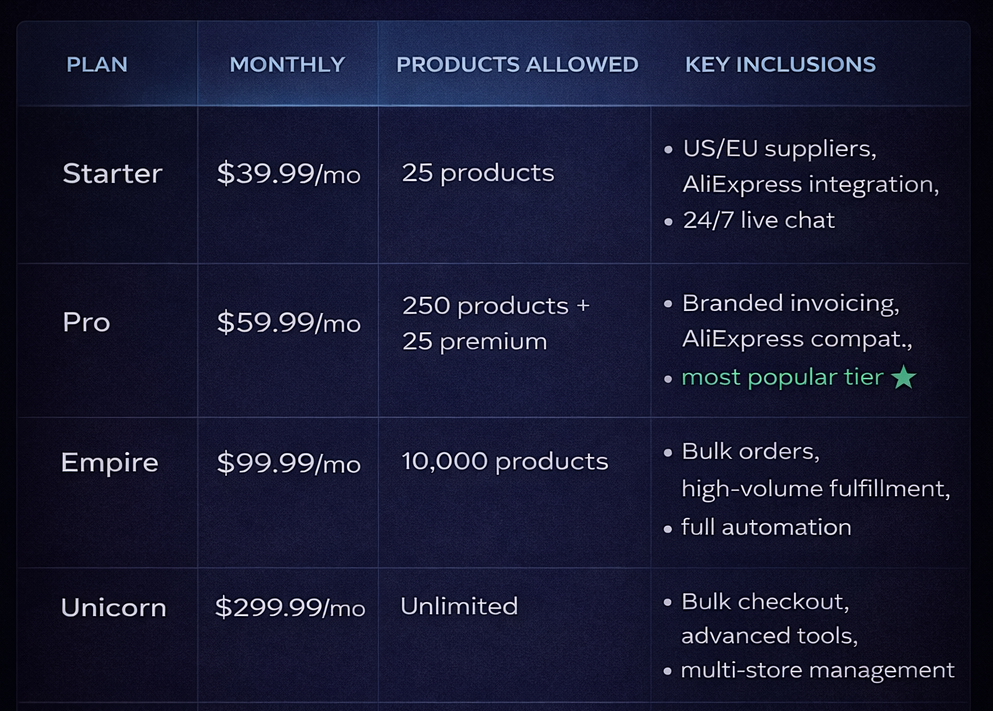
The Starter plan at $39.99/month is genuinely limiting – 25 products is a very small
catalog for any serious store. Most users who intend to run a real operation will land
on the Pro plan at $59.99/month as a minimum. Add that to a Shopify Basic subscription
($39/month), and the baseline operating cost for a Spocket-powered store starts at
roughly $100/month before ads or other tools.
WATCH OUT – UNICORN TIER UPSELL: Multiple users on G2 and Trustpilot report being
upgraded to the $299.99/month Unicorn plan without clear authorization, or discovering
that uninstalling the Shopify app does not cancel the Spocket subscription. One user
reported being charged $314.99 for the Unicorn plan after simply removing the app.
Cancel explicitly through Spocket’s dashboard – do not assume uninstallation ends billing.
CORE FEATURES: WHERE SPOCKET GENUINELY DELIVERS
US AND EU SUPPLIER NETWORK
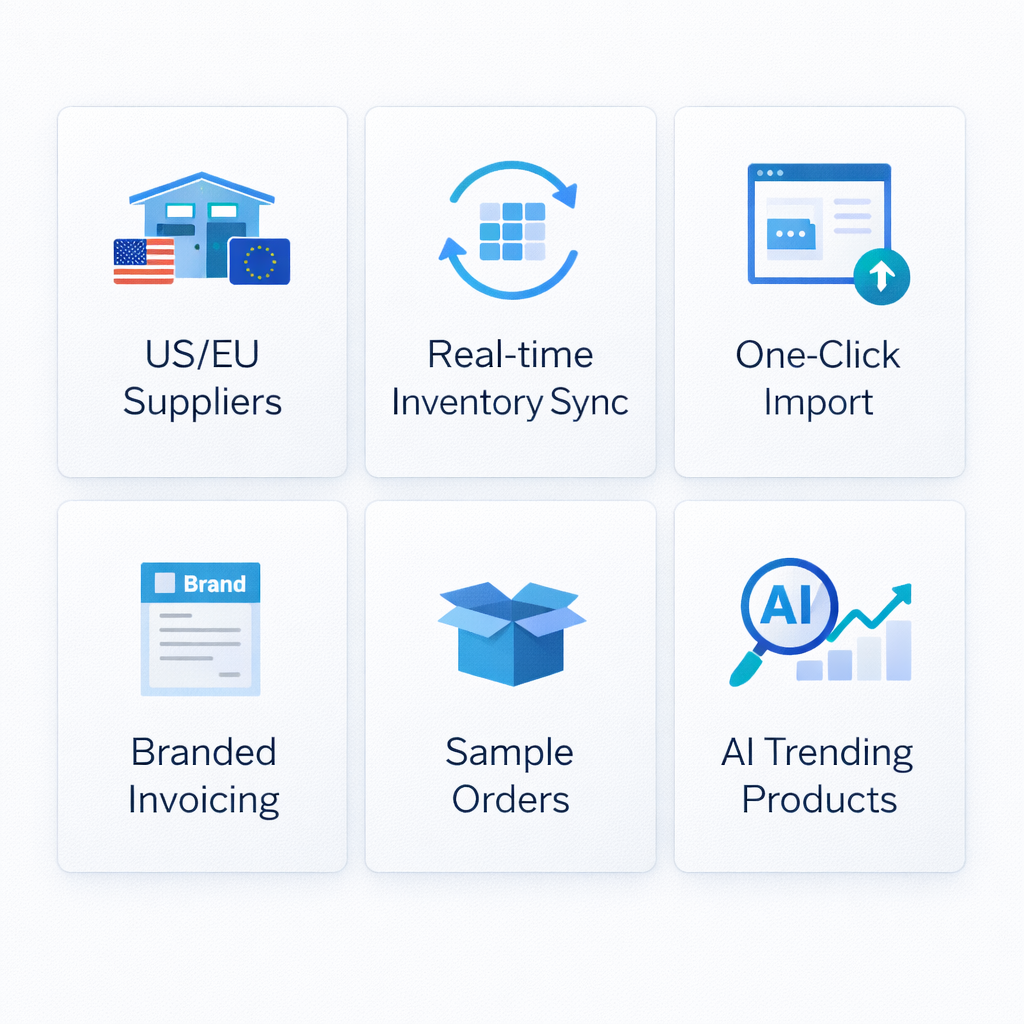
This is Spocket’s strongest genuine differentiator. The platform claims over 2,000
vetted US and European suppliers, with products covering most major niches: clothing,
home and garden, beauty, pet supplies, tech accessories, jewelry, kids products, and
more. Suppliers go through a vetting process that tracks fulfillment rates,
communication speed, and return rates. For US and EU-targeted stores, the shipping
speed advantage over AliExpress-dependent tools is real and practically significant.
REAL-TIME INVENTORY SYNC
Spocket keeps your store’s inventory in sync with supplier stock levels automatically.
When a supplier runs out of a product, your store updates – preventing the overselling
problem that’s common with manual dropshipping setups.
ONE-CLICK PRODUCT IMPORT
Adding products to your store – including titles, descriptions, images, and pricing
recommendations – takes a single click. The price calculator built into the product
browser shows your estimated profit margin before you import.
BRANDED INVOICING (Pro and above)
On the Pro plan and up, suppliers include your brand name and logo on packing slips
and invoices. This creates a more professional customer experience – the parcel
appears to come from your store rather than a random supplier.
SAMPLE ORDERING
You can order product samples directly from the Spocket dashboard before listing items.
In theory, this is an excellent feature. In practice, some users report sample delivery
taking months or not arriving at all.
ALISCRAPER / ALIEXPRESS INTEGRATION
A tool called AliScraper allows importing products from AliExpress into the Spocket
dashboard. This significantly expands the available catalog beyond US/EU suppliers.
The trade-off is that AliExpress products don’t carry the same shipping speed benefits.
AI FEATURES (new in 2026)
Spocket has added AI-driven product discovery tools that identify trending products
before they peak, along with demand forecasting and catalog optimization suggestions.
These are relatively new additions and user feedback on their practical value is
limited at this point.
PLATFORM INTEGRATIONS
Spocket integrates with: Shopify, WooCommerce, Wix, BigCommerce, Squarespace,
Ecwid, Square, Amazon, eBay.
IMPORTANT TECHNICAL NOTE: The Spocket subscription lives on Spocket’s own billing
system, not inside Shopify’s billing. This means uninstalling the Shopify app does
NOT cancel your Spocket subscription. You must cancel directly through Spocket’s website.
WHAT THE RATINGS ACTUALLY SHOW ACROSS PLATFORMS
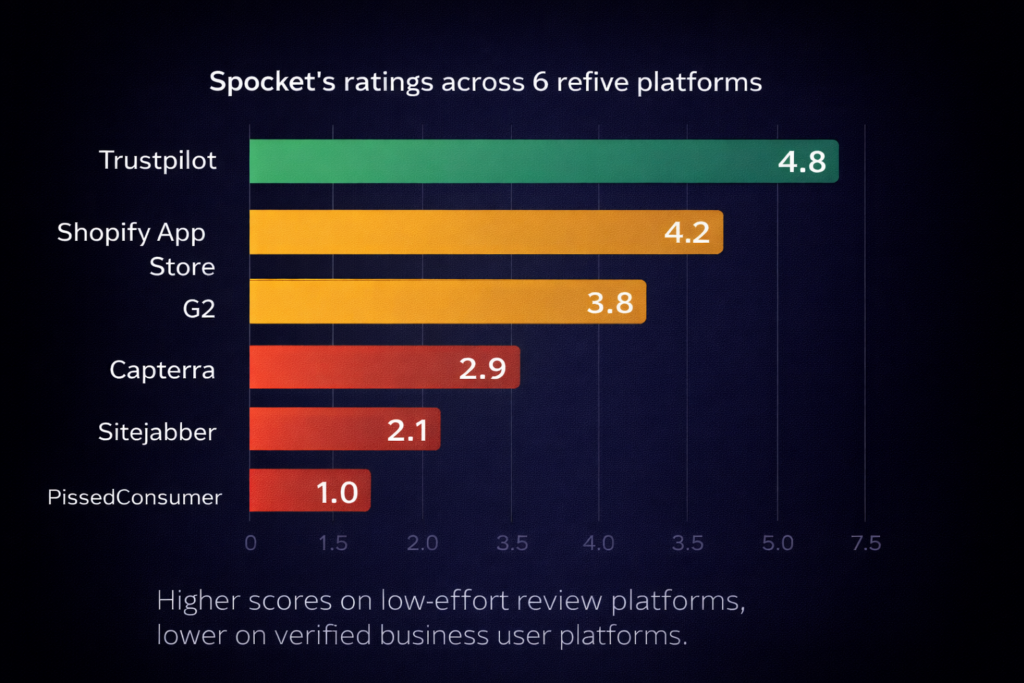
Spocket’s ratings vary dramatically depending on where you look – and the gap is
informative rather than random.
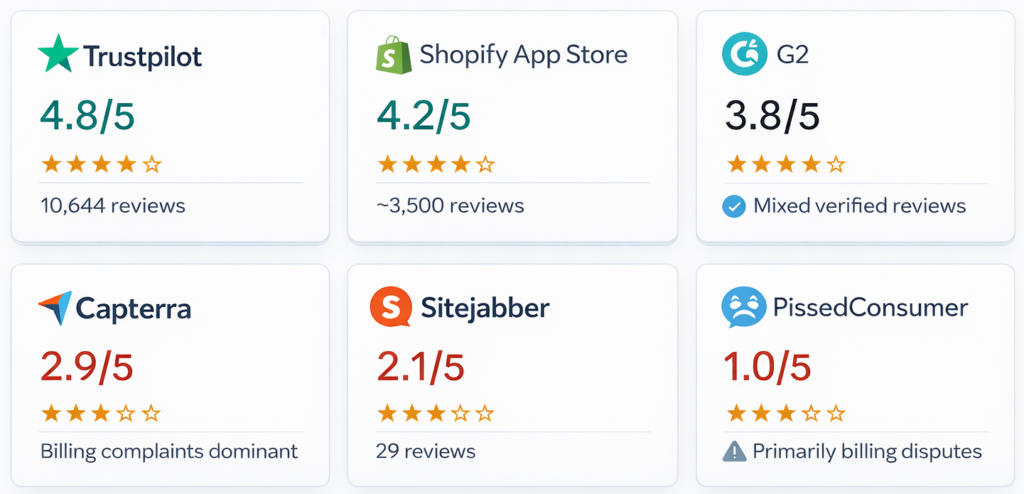
The pattern is consistent: platforms where casual users leave quick ratings
(Trustpilot, Shopify App Store) show high scores. Platforms with verified business
users who have more at stake (Capterra, G2, Software Advice) show significantly
lower scores.
There is also a credible concern raised by multiple independent reviewers that
Spocket’s Trustpilot score is inflated by reviews from accounts that have only
ever reviewed Spocket – a pattern suggesting incentivized or automated review
generation. Factor this into how much weight you place on the 4.8 Trustpilot figure.
THE BILLING COMPLAINTS: A PATTERN THAT CANNOT BE IGNORED
This section deserves its own treatment because the volume and consistency of
billing-related complaints across multiple independent platforms represents the
most significant risk factor for anyone considering Spocket.
The complaints follow a recognizable pattern. A user signs up for a free trial or
a paid subscription. They attempt to cancel – either by uninstalling the Shopify
app, or by going through the cancellation flow on the Spocket website. They do not
receive a cancellation confirmation. Weeks or months later, they discover they have
been charged – sometimes for tiers higher than they signed up for, sometimes for
months after what they believed was a successful cancellation.
REAL USER QUOTE (Capterra 2025):
“I signed up for a trial, canceled it the same day, and never received a
confirmation. Weeks later, they charged me $99 for an annual subscription I never
authorized. Their support team took days to respond and then refused a refund,
claiming they had no record of cancellation.”
REAL USER QUOTE (Trustpilot 2025):
“I installed the Shopify App in June 2025 only to test it briefly. On the same day,
I uninstalled it – I never activated or agreed to any paid subscription plan. Despite
this, Spocket continued to charge my account multiple times.”
When users escalate to support, the response pattern is consistent: initial generic
“Eleanor” bot responses, slow follow-up, requests for documentation, and eventual
refusal of refunds citing a strict no-refund policy. Multiple users report filing
complaints with the Better Business Bureau and disputing charges through American
Express or Visa.
PRACTICAL PROTECTION ADVICE IF YOU USE SPOCKET:
- Cancel through Spocket’s website dashboard directly – NOT by uninstalling the app
- Screenshot the cancellation confirmation page immediately
- Monitor your credit card for 2 billing cycles after cancellation
- Use a virtual card with spending limits if available through your bank
- If overcharged, dispute through your card issuer – direct support escalation
has low success rates based on user reports
PRODUCT CATALOG: GENUINE QUALITY WITH REAL LIMITATIONS
The US/EU supplier catalog is real and the products are generally of higher quality
than unvetted AliExpress alternatives. Discounts of 30-40% off retail prices are
standard, leaving reasonable margins for sellers.
However, several recurring criticisms emerge from real user reports:
- The catalog is smaller than competitors like Zendrop or SaleHoo for some niches
- Some products described as “US suppliers” have longer actual shipping times
- Many Spocket products are essentially the same goods available on AliExpress,
sometimes at less favorable wholesale prices - For Amazon sellers specifically, multiple users report receiving IP violation
notices for products sourced through Spocket – a significant risk for that channel
POSITIVE USER QUOTE (Shopify App Store 2025):
“The US and EU supplier access is real and valuable. I switched from DSers after
getting tired of 3-week delivery complaints from customers. Spocket cut my
shipping-related support tickets by about 60%.”
– Verified seller, Shopify App Store review 2025
CUSTOMER SUPPORT: THE OTHER MAJOR WEAK POINT
Support quality is the second major complaint theme after billing. The primary
support interface is a live chat bot that many users describe as automated and
unhelpful for anything beyond basic questions. The support persona named “Eleanor”
appears across hundreds of responses on review platforms – in identical copy-paste
format – suggesting a primarily automated or templated support operation.
When issues escalate, users report multi-week response delays, agents passing tickets
between departments without resolution, and promises of compensation (extra free months,
partial refunds) that are not honored.
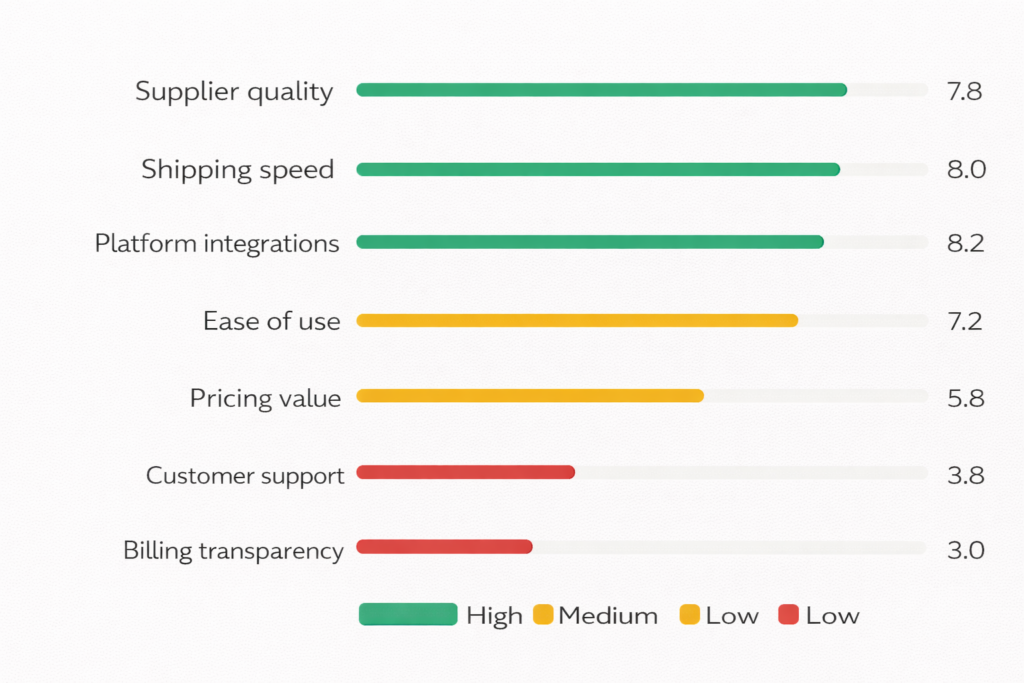
PROS AND CONS
GENUINE ADVANTAGES:
DOCUMENTED PROBLEMS:
- 80% US/EU suppliers – real 2-5 day shipping for American customers
- Automated order fulfillment with real-time inventory sync
- Wide platform compatibility (Shopify, WooCommerce, Wix, BigCommerce, etc.)
- One-click product import with profit margin calculator
- Branded invoicing on Pro and above
- Product sample ordering before listing
- Clean, beginner-friendly interface
- AI trending product tools (new 2026)
- Subscription cancellation is non-obvious and prone to billing errors
- Uninstalling Shopify app does NOT cancel subscription
- Strict no-refund policy enforced even for disputed charges
- Customer support described as robotic and unresponsive at scale
- Starter plan (25 products) too limiting for real operation
- Catalog smaller than some competitors in niche categories
- Some “US supplier” products have longer actual shipping times
- IP violation risk for Amazon sellers on some products
- Trustpilot score credibility questioned by multiple independent sources
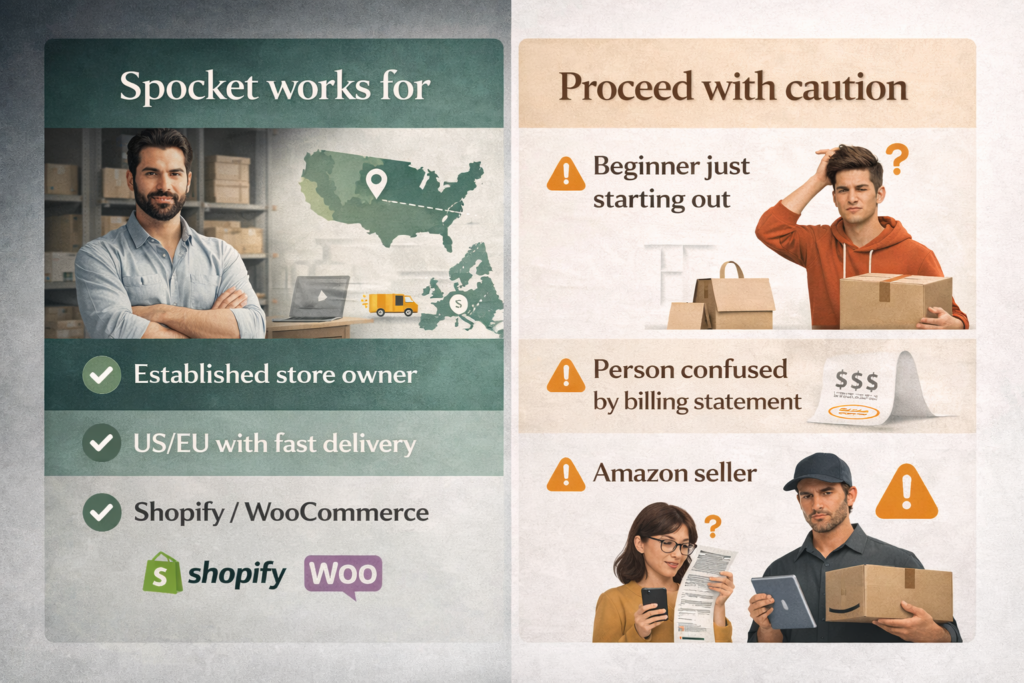
WHO SPOCKET IS – AND IS NOT – RIGHT FOR
Spocket works well for…
Spocket is a poor fit for…
- Shopify or WooCommerce stores targeting US/EU customers who need fast shipping
- Sellers who already know dropshipping and need better suppliers than AliExpress
- Boutique/fashion/home stores where branded presentation matters
- Businesses willing to vet products via sample orders before listing
- Multi-platform operators who need one sourcing layer across stores
- Total beginners who haven’t set up a store yet (you need a platform first)
- Anyone with a low tolerance for subscription billing complexity
- Amazon sellers (IP violation risk is documented and real)
- Niche markets needing deep, specialized catalogs
- Anyone who needs reliable refund access if the platform doesn’t work
- Sellers on tight budgets (real operating cost $100+/mo after base platform)
ALTERNATIVES WORTH COMPARING
DSers is the official AliExpress dropshipping tool and is completely free on the basic plan. The trade-off is longer shipping times from Chinese suppliers. For price-sensitive sellers who can manage customer delivery expectations, DSers is a legitimate option with far fewer billing complaints.
Zendrop is a direct competitor to Spocket with a focus on US-based fulfillment and a more transparent subscription model. It offers a free plan with limited features and is generally regarded as having better support responsiveness than Spocket based on recent reviews.
AutoDS is a more automation-heavy alternative that sources from multiple supplier networks including AliExpress, Amazon, and others. Better suited to high-volume sellers who want to scale across multiple platforms simultaneously.
SaleHoo operates as a supplier directory rather than an automated integration tool. Less plug-and-play, but useful for finding unique or niche suppliers that aren’t available on marketplace-style platforms.
Final assessment
Spocket occupies a real niche in the dropshipping ecosystem and fills it adequately. If your store is US or Europe-targeted, the shipping speed advantage over AliExpress-based tools is a genuine operational benefit that translates into fewer customer complaints, better reviews, and higher repeat purchase rates. The platform integrates cleanly with major e-commerce platforms and the core workflow – find product, import, fulfill – works as advertised for most users most of the time.
The problem is not the product concept. The problem is the operational experience around billing and support that appears to affect a material percentage of users. When something goes wrong – and with subscription software, something occasionally does – the experience of resolving it through Spocket’s support system is, based on a large and consistent body of evidence, significantly below what a paying customer should expect.
The practical recommendation: if you use Spocket, treat the subscription management with more caution than you would a typical SaaS tool. Document cancellations, monitor your billing, and use a payment method with strong dispute resolution. The core product is useful enough to justify a trial – just go in with clear eyes about the risk areas.
Bottom line score: 6.4 / 10. Good idea, solid supplier network, real shipping advantage for US/EU stores. Significantly undermined by billing practices and support quality that are well-documented across independent platforms. Worth trialing with caution – not worth recommending without that caveat prominently stated.
2 responses to “SPOCKET REVIEW 2026: FEATURES, PRICING, AND WHAT REAL USERS ACTUALLY EXPERIENCE”
-
Honestly the 6.4 surprised me after reading all that. The billing section alone should knock it down a couple points – this isn’t occasional user error, it’s a documented pattern across multiple platforms over multiple years. And the “uninstalling the app doesn’t cancel the subscription” thing isn’t a quirk, that’s a design choice.
The supplier network is genuinely useful, no argument there. But useful core product + predatory cancellation flow is not a 6.4 situation. Plenty of tools with worse features treat their customers better.
Trial it if you want, just use a virtual card and screenshot everything. Twice. -
Solid review, covers the important stuff. The billing section is the most useful part – that “uninstalling the app doesn’t cancel the subscription” thing has burned so many people and Spocket does absolutely nothing to make it obvious.
Used it for about 4 months. The US supplier shipping times are real, that part works. But the catalog felt thinner than advertised once I started actually looking for products in my niche – a lot of the “US suppliers” had shipping estimates that were closer to 10-12 days than the 2-5 they put on the listing.
Eleanor or whatever that bot is just stalls until you give up. Never once got a straight answer on anything beyond basic questions.
6.4 feels about right honestly – maybe even slightly generous given how sketchy the cancellation flow is. Would consider it again only if they fixed the billing transparency, which based on how long these complaints have been sitting on Trustpilot, they clearly have no interest in doing.



Jo Carter is an editor and ecommerce researcher at Ecom Reality, where she covers ecommerce platforms, digital selling tools, online business software, pricing models, and emerging industry trends. She focuses on turning complex platform features and costs into clear, practical information for entrepreneurs and digital sellers. Her work combines detailed research with a balanced editorial approach, helping readers compare services, understand potential limitations, and choose tools that fit their business goals.
Comments
Leave a Reply
Related Articles



Leave a Reply